

Latest articles by Jeff Atkinson

Cycling track at Exhibition Building
In the late 19th and early 20th centuries, cycle racing was one of the most popular sports in Melbourne.
Read More
Carlton’s Olympic cyclist
On the corner of Lygon and Grattan streets in Carlton is a building with a distinctive neon sign featuring a man on a racing cycle.
Read More
Early days of cycling in Melbourne
In the 1890s, the riding of bicycles became a popular activity for Melbournians. Unlike the earlier and rather dangerous high-wheeled “penny farthing” bikes, the newly introduced “safety bicycles” with their pneumatic rubber tyres and chain drives could be ridden by almost anyone.
Read More
An early Grand Final
This photo shows what a football grand final match at the Melbourne Cricket Ground looked like in 1907.
Read More
Carlton Football Club’s early uniform
While most clubs in the Australian Football League (AFL) identify themselves with an animal or object (for example, the Swans, Bulldogs, Bombers) the Carlton Football Club identifies itself solely with a colour – the Blues.
Read More
Origins of the Carlton Football Club
Carlton’s famous football club, the “Blues”, has been in existence for more than 150 years.
Read More
Petrol rationing and charcoal burners
In recent decades much attention has been given to alternative ways of powering cars, other than through the use of petrol, in order to minimise emissions.
Read More
Carlton’s citizen soldiers
Up until 1948, Australia had no permanent standing regular army. Instead, it relied on “citizen soldiers”; young men who lived at home rather than in a barracks and held regular civilian jobs, but who donned a uniform to parade and train in military skills in their spare time, after work and at weekends.
Read More
American soldiers in Royal Park
During the Second World War, Royal Park in Melbourne became a massive US Army base, which at its peak housed thousands of American troops.
Read More
Jewish Carlton continued
The Jewish population that first settled in Melbourne in the 19th century were mainly from England, that is, they were English speaking and well adapted to living in a predominantly British cultural environment such as that in Melbourne at the time.
Read More
Jewish Carlton
There has always been a Jewish community in Melbourne from the time of the earliest settlement. They were mainly immigrants from London and other parts of England, that is, English-speaking and part of the general British population of Melbourne at the time.
Read More
Parachuting from a balloon
In the early years of the 20th century, ascending into the air was not something that humans normally did.
Read More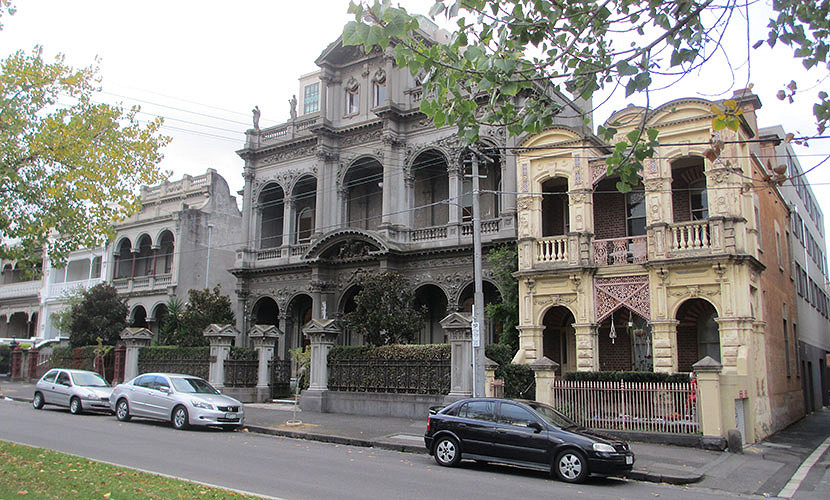
A mansion built from selling firearms
This large house at 48 Drummond St, Carlton, was built with money made from selling small arms to the citizens of Melbourne. It is one of Melbourne’s most florid examples of the Victorian Baroque style, with many exterior decorations, terra cotta roof ornaments, and an equally spectacular interior. It was initially called Benvenuta, meaning “welcome” in Italian.
Read More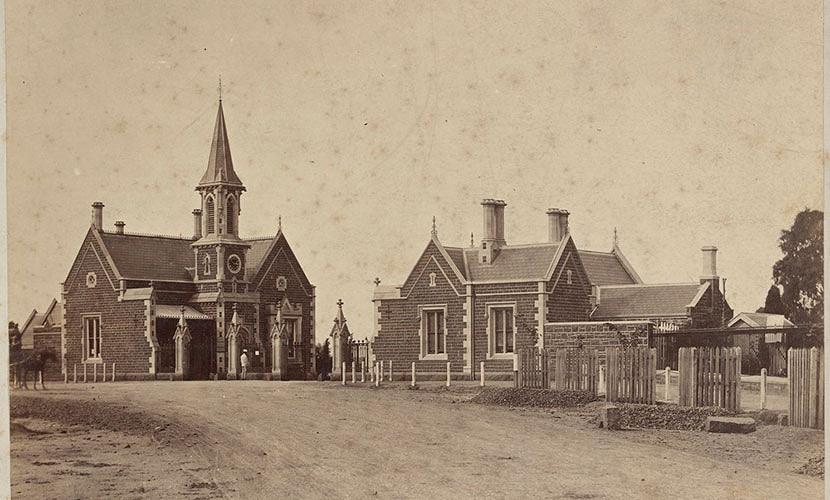
Melbourne’s historic cemetery
During its 170 years of operation, the Melbourne General Cemetery in Carlton has become the final resting place of many of the important figures of Victoria’s and Australia’s colonial and later history, including seven Premiers of Victoria and several Prime Ministers of Australia. However, the managing of the cemetery by its trustees has been a source of considerable controversy.
Read More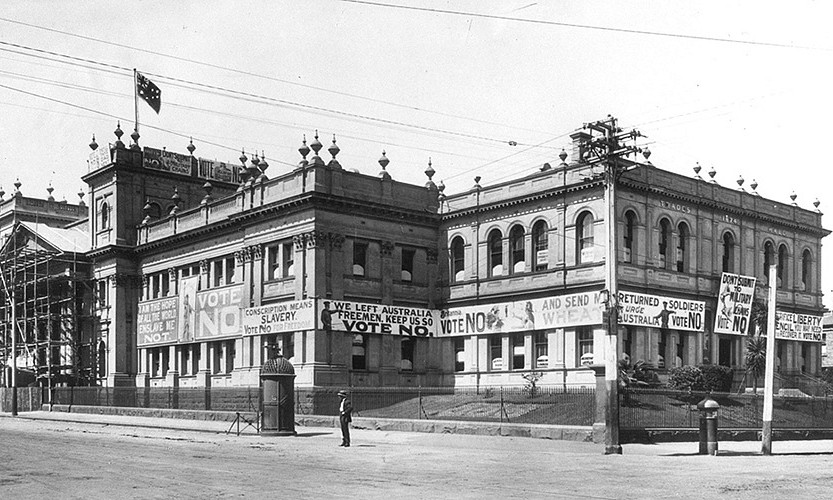
Historic Trades Hall
Trades Hall on Lygon St, Carlton, is one of Melbourne’s most historically important sites. It is Australia’s oldest and largest Trades Hall and a symbol of the importance of organised labour within Australian society in the 19th and 20th centuries.
Read More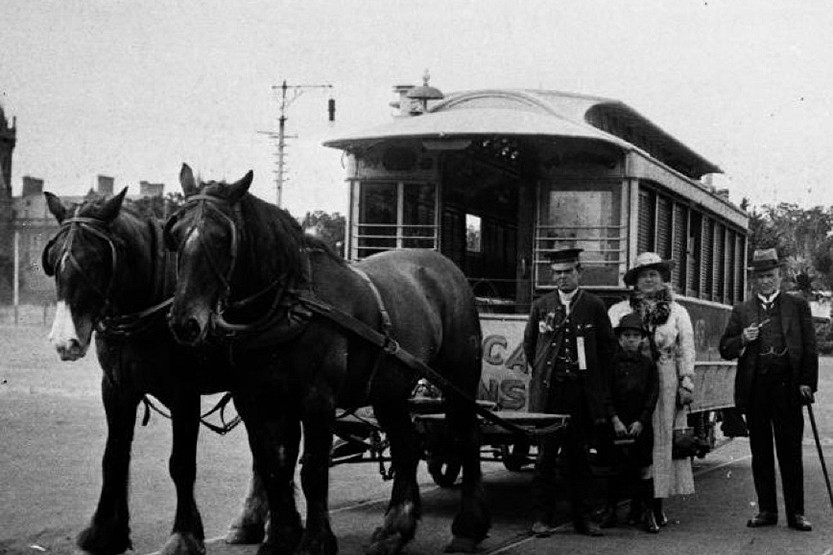
Horse-drawn trams in Royal Park
Melbourne’s first trams were not powered by electricity, or by a cable, but by horses. There were in the early days a number of horse tram routes in Melbourne, including one that ran through Royal Park to the entrance of the Zoo.
Read More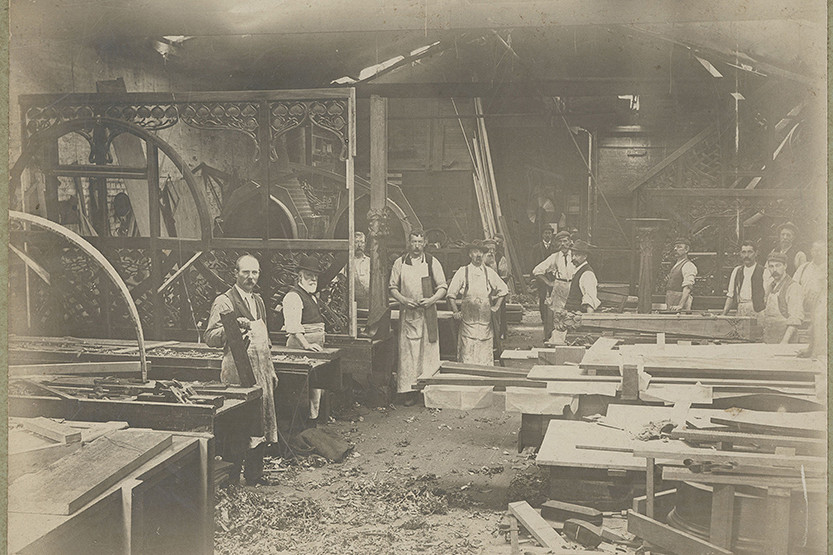
Melbourne’s original trams
Before electric trams were introduced in Melbourne in the early 20th century, the city had an extensive system of cable trams.
Read More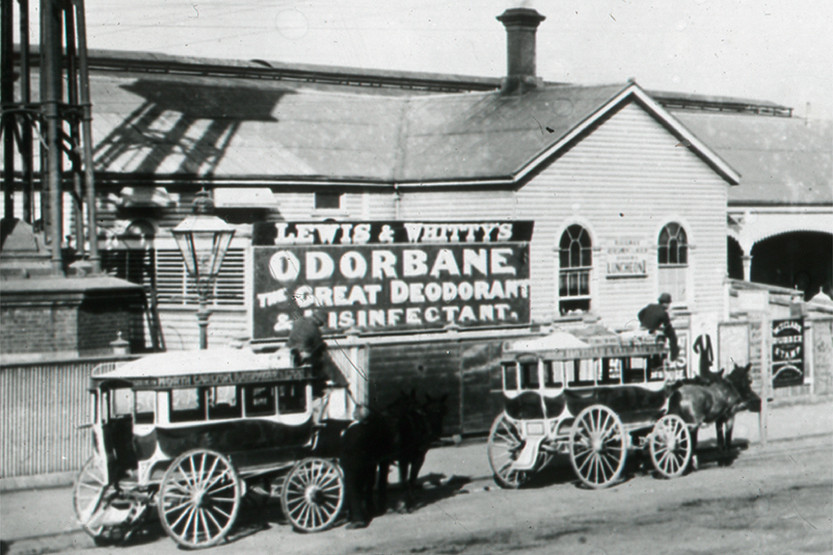
Melbourne’s first buses were horse-drawn
In the late 19th century, the only forms of public transport available to people living in the inner northern suburbs of Melbourne were horse-drawn cabs and omnibuses. Suburban rail lines and cable trams to those suburbs were not established until the late 1880s.
Read More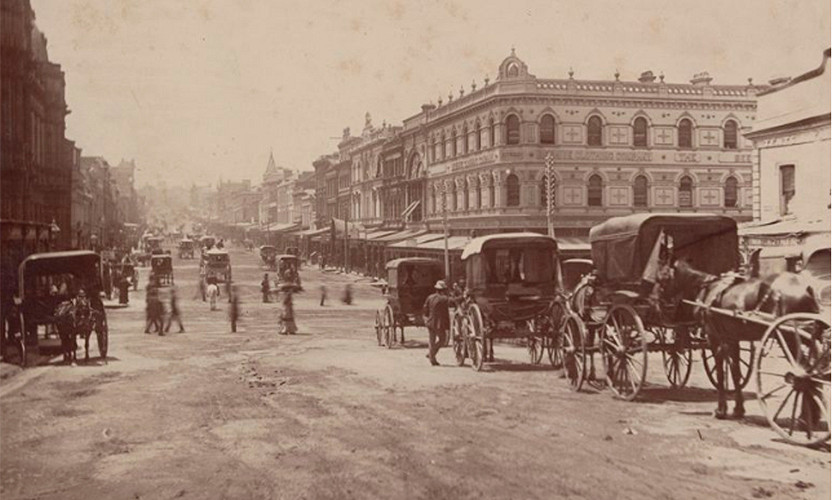
Melbourne’s horse-drawn cabs
In the late 19th century, the inner northern suburbs of Melbourne were poorly served by public transport.
Read More
“Squizzy” Taylor shot in Carlton
One of the more notorious incidents that happened in Carlton at that time was a shoot-out in which two crime figures, “Snowy” Cutmore and “Squizzy” Taylor, ended up dead.
Read More